Bridal Makeup Artist Booking: Manage Trials & Big Days
How a Singapore bridal makeup artist can take bookings online — split the trial from the wedding-day slot, bundle them as a pass, ask for a PayNow deposit when the date is booked, and stop chasing dates over DMs.
LovingBooking Team
Updated 7 min read
In this article
- Why bridal makeup booking is its own problem
- Publish the trial and the wedding day as separate services
- Sell the trial and the big day together
- Take a deposit — the date is irreplaceable
- Book the whole party, not just the bride
- Let the booking page take the enquiry off your DMs
- Reminders, and where to start
How to set up online booking for a bridal makeup artist
Get a Singapore bridal makeup artist taking bookings online: split the trial from the wedding-day slot at their real lengths, add party makeup and extra looks as their own services, bundle the trial and big day into a pass, ask for a deposit when the date is booked, capture the brief before the trial, and let reminders carry the run-up.
Split the trial from the wedding-day service
Create the bridal trial and the wedding-day makeup as two separate services with their true lengths — 60 to 90 minutes for a relaxed trial where you test the look, and the full morning block a wedding needs including lashes, touch-up kit and a little buffer. The booking page then offers a slot honest to the session the bride actually picked, and a trial never lands in a gap meant for the big day.
Add party makeup and extra looks as their own services
Publish bridesmaid, mother-of-the-bride and family makeup as their own add-on services, each with its own length and price, plus a second-look or evening-change service for brides who change for the dinner. When the bride books four extra faces, the morning books four extra blocks of time — not a surprise you discover at the venue with a queue forming.
Bundle the trial and big day into a pass
Sell the trial and the wedding-day makeup together as a pass the bride buys once, rather than two separate bookings she might only half-commit to. On the paid plan a pass is purchased by PayNow — she transfers payment and uploads the screenshot, you confirm it by hand, and the trial and big day are then hers to schedule against the pass.
Ask for a deposit when the date is booked
A wedding Saturday you have blocked for one bride is a morning you turned other enquiries away for, and it cannot be refilled at short notice. On Pro, switch on your PayNow QR and set Payments › Payment setup › When customers pay to Deposit when booking, as an amount or a percentage: the bride pays you directly and adds a screenshot before confirming, and you mark the deposit received once it is in your bank. It applies to sessions booked one at a time: a bride who buys the trial and the big day as a pass pays for that in full by PayNow, or in instalments on Pro, and the sessions she books against it ask for nothing more. There is no card rail, but a date with a deposit behind it is a committed one.
Capture the brief before the trial
Use the booking notes field to ask for what you need before the trial — skin type and any allergies, the inspiration or look she wants, whether she wears lashes, and for the wedding day the venue, the call time and how many faces. Reading it beforehand means the trial starts with the right products already on the table.
Set reminders and hand over the reschedule link
Let LovingBooking email the bride before both the trial and the wedding day, each reminder carrying a link she can use to reschedule the trial herself if life gets in the way during the planning months. The big-day slot stays firm; the trial can flex without a single WhatsApp back-and-forth.
Why bridal makeup booking is its own problem
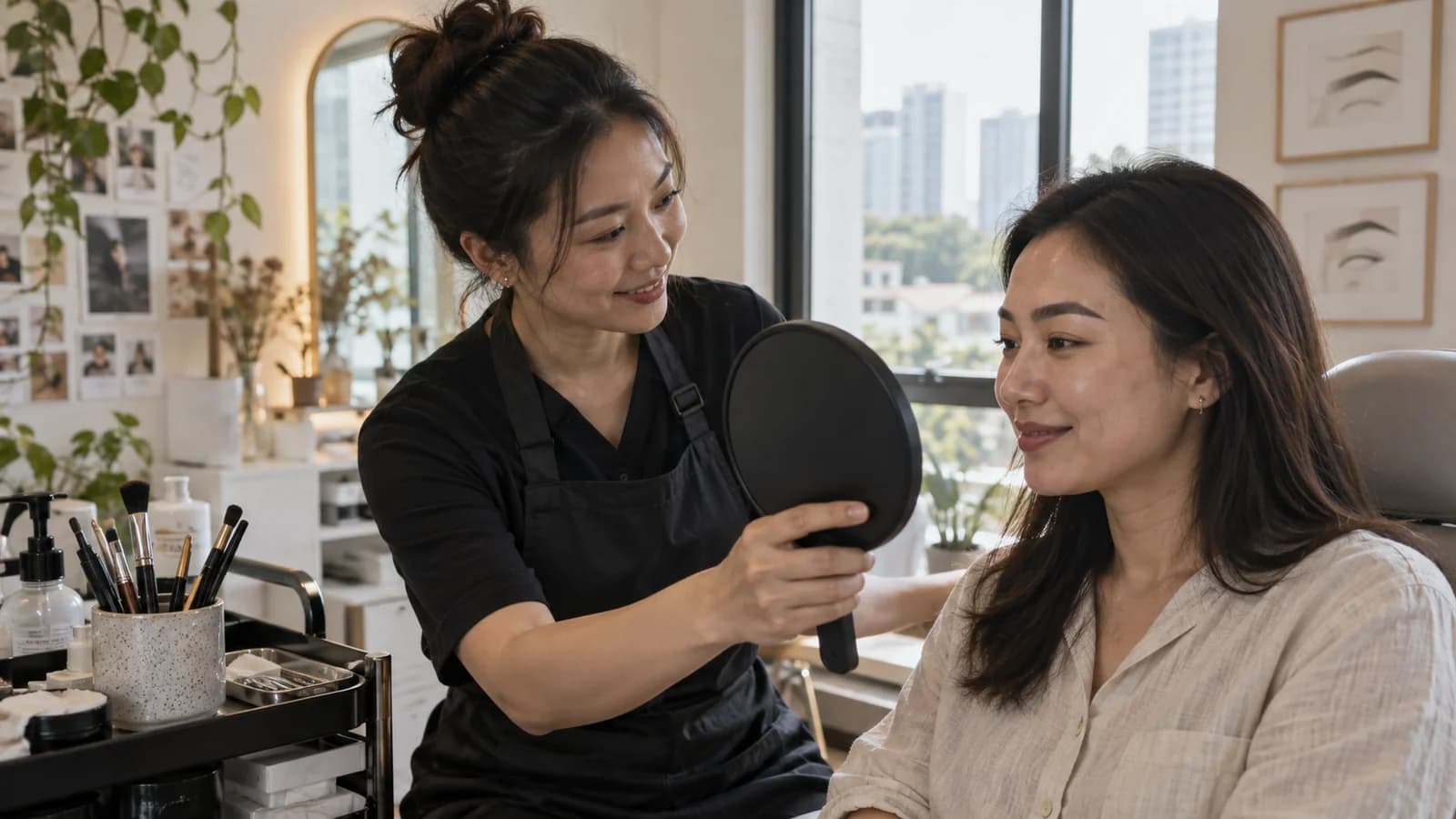
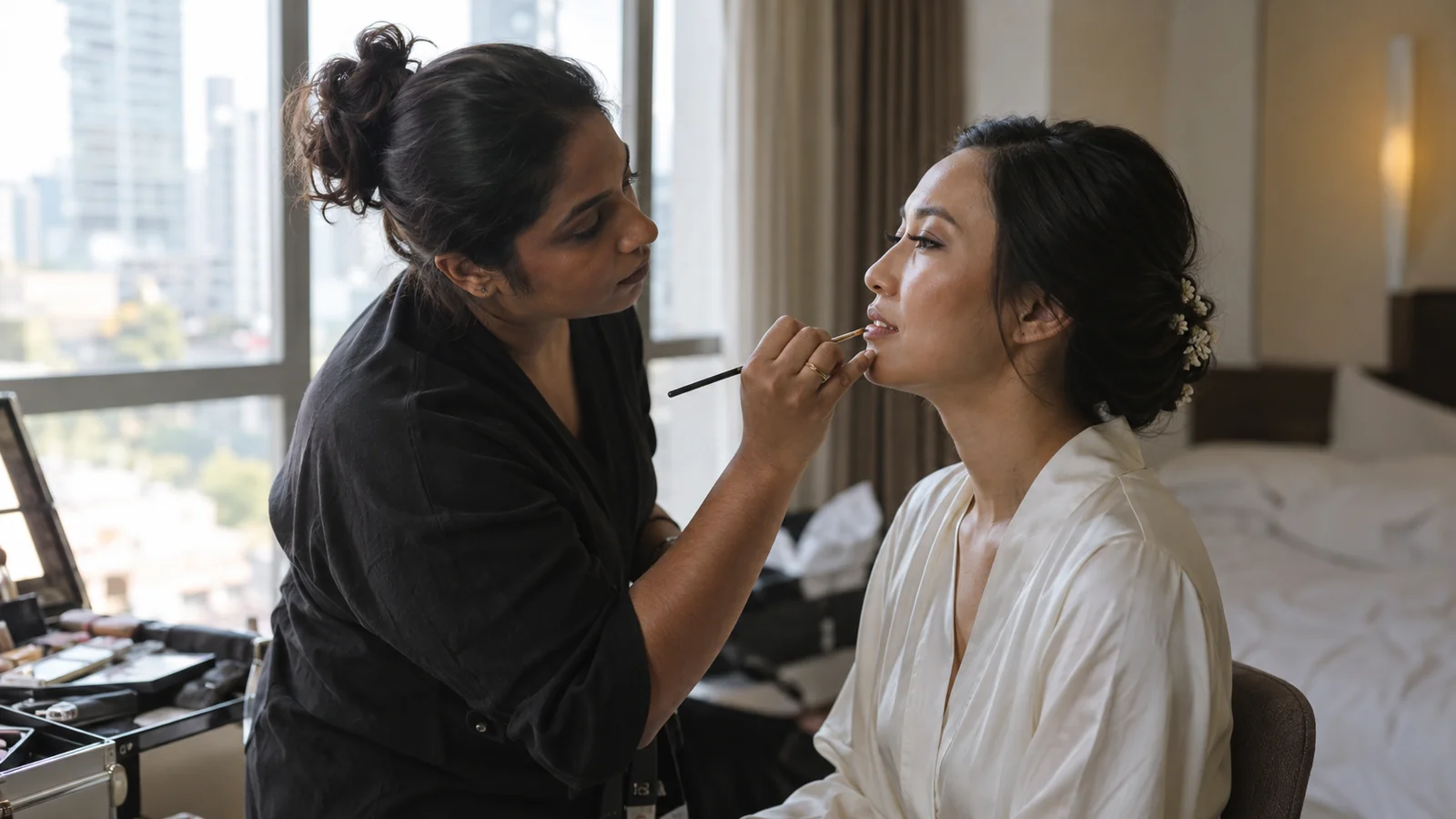
A bridal makeup artist runs a business that looks nothing like a walk-in beauty service, and most booking tools miss why. The whole thing turns on two appointments that could not be more different. The trial is relaxed: an hour and a half where a bride comes in, you test a look, she takes photos in different light, you adjust. The wedding day is the opposite — a fixed, early call time that cannot move, on a date that only happens once, often at a hotel or venue across town. Treat those two as the same kind of slot and the diary is wrong before you start.
There is also the small matter of how bridal work is sold. It is a handful of high-value bookings a month, not a stream of quick ones, and each one is booked months ahead over long DM threads about availability, price and which Saturday. This guide walks through setting bookings up for a Singapore bridal makeup artist, and it is honest about what the tool does and does not do.
Publish the trial and the wedding day as separate services
This is the step everything else rests on. In LovingBooking a service carries a duration in minutes, and the booking page only ever offers a slot long enough for the service the bride picked. The mistake is publishing one generic "bridal makeup" and guessing the length each time.
Instead, split them:
- Bridal trial — set it to the real 60 to 90 minutes a proper trial takes. This is a working session, not a quick face, and it needs room to test and adjust.
- Wedding-day makeup — the full morning block, including lashes, a touch-up kit and a little buffer. This is the fixed, non-negotiable one.
- Bridal party, second looks, evening change — each its own service with its own length and price (more on these below).
Get these numbers right once and the page enforces them every time — no trial dropped into a slot meant for a wedding, no wedding morning quietly under-timed because it borrowed a trial's length.
Lock the trial and the wedding date in one booking
Start freeSell the trial and the big day together
The awkward pattern in bridal work is the bride who books a trial, loves it, and then goes quiet on the actual date while she compares quotes — and you have held nothing. The fix is to sell the two together.
Use a pass: the trial and the wedding-day makeup as one purchase the bride makes up front, then books each session against. On the paid plan a pass is bought by PayNow — she transfers payment and uploads the screenshot, you confirm it by hand, and both sessions are then hers to schedule. Be straight that this is a manual reconciliation, not a card charge: there is no card rail in the booking flow, the platform never touches or holds the money, and a pass sits pending until you mark it paid. What it buys you is commitment — a bride who has paid for the pair is booking her date, not shopping it.
Take a deposit — the date is irreplaceable
Every other booking in this guide can be refilled if it falls through. A wedding Saturday cannot. When you block that morning for one bride, you are turning away every other enquiry for it, and if she disappears three weeks out there is no filling it at short notice. That is why bridal work, more than almost any trade, earns its deposit.
On Pro you show your PayNow QR and set Payments › Payment setup › When customers pay to Deposit when booking, as an amount or a percentage. The bride pays you directly and adds a screenshot before confirming, the booking is confirmed straight away, and you mark the deposit received once it is in your bank. It is worth being upfront that the check is manual — but a date backed by a deposit is a committed date, not a pencilled-in one. The rule covers every appointment, the trial included, and a session booked against a paid pass, like the trial-and-wedding pass above, asks for nothing more. Write down what happens if she cancels, and you have protected the one slot you cannot afford to lose. The mechanics are the same as our guide to accepting PayNow for bookings, and it is worth pairing with a clear cancellation policy so nobody is surprised.
Book the whole party, not just the bride
A wedding morning is rarely one face. There is the mother of the bride, the bridesmaids, sometimes a sister or two, and often the bride herself needing a second look for the evening dinner. That is real revenue, and it is also the thing most likely to run your morning late if it is not planned.
Publish bridal party makeup as its own add-on service, and a second-look or evening-change service for the bride who changes for the reception. Each carries its own length and price, so when the bride tells you there are four extra faces, the morning reserves four extra blocks of time rather than leaving you improvising with a queue forming at the hotel. It is the same per-service discipline that keeps any busy beauty chair — from a lash and brow studio to a nail bar — running on time instead of overlapping.
Let the booking page take the enquiry off your DMs
Most bridal enquiries start on Instagram, and they usually start as a message: "Hi, are you free on the 14th?" That thread can run for days before it becomes a booking, and half of them never do. A booking page short-circuits it.
Put your link in your Instagram bio and story highlights — our step-by-step guide to the Instagram booking link covers exactly how — so a bride who has just scrolled your portfolio can see your real availability and book a trial herself. She picks a slot, the page holds it, and you capture the brief in the booking notes at the same time: her skin type, any allergies, the look she is after, and for the wedding day the venue, the call time and how many faces. Reading that before the trial means you walk in with the right products already out.
Reminders, and where to start
In the months between the trial and the wedding, plenty can shift. LovingBooking emails the bride before both appointments, and each reminder carries a reschedule link she can use to move the trial herself if she needs to — the wedding-day slot stays firm, but the trial can flex without a single message back and forth.
Wedding photographers book the same way: see photographer booking.
The setup is small and front-loaded: an afternoon spent splitting the trial from the wedding day at their honest lengths, adding party and second-look services, bundling the trial and big day into a pass, and deciding your deposit. After that the page runs the diary. Free covers your first 200 bookings, for up to 3 artists and 1 location — and because bridal is a few high-value bookings rather than a high volume, that goes a very long way. PayNow, a second location and a custom booking domain come with Pro at US$12 a month for up to 3 people, then US$12 a month for each extra person. Set up your booking page, put the link in your Instagram bio, and let brides book their trial instead of waiting on a reply.
Lock the trial and the wedding date in one booking
LovingBooking lets a bride book her trial and her big day herself. On Pro, ask for a PayNow deposit when she books: she pays you directly and adds a screenshot, and you mark it received once it reaches your account.
Start for freeFree to start · No credit card
Frequently asked questions
How do I keep a wedding-day booking from being treated like a normal appointment?
How do I keep a wedding-day booking from being treated like a normal appointment?
By publishing the wedding-day makeup as its own service with its true length and by asking for a deposit when the date is booked. A wedding morning is not a flexible slot — it is a fixed, early, non-negotiable call time, and it is the one booking you genuinely cannot afford to lose or double up. Give it an honest block that includes lashes, a touch-up kit and buffer, keep it separate from the shorter trial, and on Pro ask for a PayNow deposit, paid to you directly when she books, so the date is committed rather than pencilled in. The booking then behaves like what it is: the anchor of that whole morning.
Should a bridal makeup artist take a deposit, and how does it work here?
Should a bridal makeup artist take a deposit, and how does it work here?
For wedding-day bookings it is close to essential. A Saturday morning blocked for one bride is a morning you turned other brides away for, and if she disappears you cannot refill it at short notice. A deposit makes the commitment real. On Pro, set Payments › Payment setup › When customers pay to Deposit when booking, as an amount or a percentage: the bride pays you directly by your PayNow QR and adds a screenshot before confirming, the booking is confirmed straight away, and you mark the deposit received once it is in your bank. It is one rule for every appointment, so it covers the trial too, while a session booked against a paid pass asks for nothing more. There is no card rail in the booking flow, so the platform never touches the money; the mechanics are in our guide to accepting PayNow for bookings. Pair it with a clear written rule from our cancellation policy templates.
Can I sell the trial and wedding day as one pass?
Can I sell the trial and wedding day as one pass?
Yes, through passes. Rather than a bride booking a trial and then going quiet on the actual date, you sell the trial and the wedding-day makeup as a single pass she buys once, then books each session against it. On the paid plan the pass is purchased by PayNow — she transfers the amount and uploads a screenshot, and the pass activates when you confirm it by hand. There is no card rail in the booking flow, so the platform never touches the money — until you mark it paid the pass sits pending. It is the cleanest way to make sure the trial and the big day are committed together.
Can I take bookings for the bridal party too, not just the bride?
Can I take bookings for the bridal party too, not just the bride?
Yes. Publish bridesmaid, mother-of-the-bride and family makeup as their own add-on services, each with its own duration and price, plus a second-look service for a bride who changes for the evening dinner. When the party is booked in advance, each extra face reserves its own block of time on the morning, so a wedding with five faces books five faces worth of time instead of leaving you improvising with a queue at the venue. It is the same per-service discipline that keeps a busy lash and brow studio’s chair full without overlaps.
Can brides book me straight from my Instagram?
Can brides book me straight from my Instagram?
Yes, and for most bridal artists Instagram is where the enquiry starts. Put your LovingBooking link in your bio and in your story highlights so a bride who has just seen your portfolio can pick a trial slot without sliding into your DMs — our step-by-step on the Instagram booking link walks through exactly that. She sees your real availability and books herself, which turns a "are you free in November?" message thread into a confirmed booking on your calendar.
How much does a booking system cost for a solo makeup artist?
How much does a booking system cost for a solo makeup artist?
Free covers your first 200 bookings, for up to 3 artists and 1 location, with the booking page, real service durations and email reminders included. Because bridal work is a small number of high-value bookings rather than a high volume of short ones, your first 200 bookings go a very long way here. An artist who wants PayNow, a second location or a custom booking domain needs Pro at US$12 a month for up to 3 people, then US$12 a month for each extra person, with one app-managed, cardless Pro trial (14 days, or 3 months for a trial started on or before 31 December 2026, Singapore time).